My Thoughts and Expressions
Kiran Mazumdar Shaw
Showing posts with label Affordable Healthcare. Show all posts

Friday, 22 September 2017

India To Be A Biotech Hot Spot


The last 70 years have been transformational for the Indian biotech industry, mirroring the nation’s own rapidly advancing economy and rising global status. We have successfully leveraged recombinant DNA technology to deliver biopharmaceuticals, vaccines, genetically engineered crops and enzymes. In doing so, we have created a notable bio-economy valued at $35 billion. 

We have embraced cutting-edge technologies, built global scale manufacturing capacities, and benchmarked our systems and strategies to global best practices. Currently, India is among the top 12 biotechnology destinations in the world and ranks third in the Asia-Pacific region. While our immediate goal is to build a $100 billion bio-economy in India by 2025, in the next 30 years, India aspires to become a biotechnology hot spot reputed for its high-value, low-cost innovations in bio-therapeutics including personalised and precision medicine, advanced enzyme technologies, GM crops and bioinformatics.  

The success of India’s biotechnology industry can be traced to the pioneering spirit of entrepreneurs who leveraged a nascent technology and India’s cost-effective scientific talent pool to bring affordable innovations to the market. Its evolution over the decades mirrored the country’s growing confidence in life sciences. While the 1980s were the decade of enzymes, the next decade saw vaccines gaining prominence as a business segment. The emergence of genomics research companies in the 2000s was followed by Novel biologics and biosimilars making an impact from 2010 onwards.

I started Biocon as India’s first biotech enterprise in 1978 in a garage in Bengaluru to manufacture industrial enzymes for food and textile industries around the world. The initial years were tough as I encountered market scepticism, funding challenges, infrastructural hurdles, manpower issues and government apathy. I persevered because I believed biotechnology was the technology of the future with the potential to deliver transformational change.

By the mid-1980s, Biocon had evolved as the largest enzymes company of India pursuing an R&D-led biotech business. As few more biotechnology-based companies started coming up, it caught the attention of the government and, in 1986, the Department of Biotechnology (DBT) was established. I was privileged to be invited to be a part of the DBT’s Task Force, which helped articulate the regulatory framework for the industry. Recombinant technologies were at the fulcrum of regulations covering vaccines, genetically modified crops and biopharmaceuticals. 

Biocon’s stock market debut in 2004, as the first biotech company in India to go public, commanded a premium valuation. It led to the development of a biocluster in Bengaluru, attracting a number of large and small biotech companies. These included Strand Genomics, a bioinformatics company; Gangagen, a phage-based antibiotic company; Reametrix, a whole blood-based diagnostics instrumentation company; Syngene, which spearheaded research services; and Bio-IT companies like Genotypic Technology, BigTec and Molecular Connections. The cluster also spurred the growth of ancillary biotech companies. 

The disruptive power of Indian biotechnology innovation grabbed the attention of the world in the late 1990s when companies like Shantha Biotechnics, Bharat Biotech, and Serum Institute started producing and supplying vaccines at a fraction of the cost of western drug makers. Today, ‘1 in 3’ children globally are immunised with a ‘Made in India’ vaccine. 

Having built a strong base of indigenous R&D capabilities and excellent clinical trials and manufacturing infrastructure, the industry started developing biotech-based drugs or biologics. Taking the lead, Biocon introduced India’s indigenously developed recombinant human insulin using a proprietary fermentation technology in 2004 and, along with Wockhardt, was able to break the monopoly of innovators in insulins by offering indigenously manufactured affordable alternatives, thus enhancing access to this life-saving therapy. 

Over the years, Biocon has successfully launched two novel biologics and five biosimilar products aimed at cancer, diabetes and autoimmune diseases, making these advanced therapies available to a large patient population. Today, there are a select few companies such as Dr. Reddy’s Labs, Zydus Cadila, Intas Pharma, Reliance Life Sciences, Lupin, etc., which are active in the area of complex biologics/biosimilars. The biotechnology sector is evolving fast and it promises to transform healthcare, agriculture and environmental management, leading to the dawn of the ‘Biotechnology Age’. 

By 2030, the Indian bio-economy sector is expected to attain a size of $200 billion. I foresee the intelligent use of data to transform global health. India’s highly developed software skills offer a unique Bio-IT opportunity to mine, analyse and interpret data and create algorithms that can match therapies with the diagnosis. There is also considerable excitement over the promise of targeted genome editing technologies like CRISPR CAS9, which can potentially prevent several diseases, including some cancers, and prevent specific genetic anomalies from being passed on to future generations. 

I believe, by 2050, cancer will become manageable through advances in the field of immuno-oncology, which works by stimulating an immune response against malignant tumours, thus replacing the need for chemotherapy and radiotherapy. 

Biotechnology in agriculture and farming has the potential to address numerous challenges associated with food security in India. Just as the commercial cultivation of genetically modified cotton in India, starting 2002, helped convert the country from a net importer to a net exporter of cotton, selective propagation of genes that improve yields and are resistant to pests, flooding and drought, could make food cheaper, more nutritious and abundant. 

Bioremediation techniques, which offer a cheaper alternative to conventional cleaning technologies, can be used to address the impending global crisis in the area of water and energy. Application of technologies like the ones being developed by Sea6 Energy, will help harness the potential of the oceans to provide solutions in energy, agriculture and feed, thus helping restore the ecological balance.


This article originally appeared in September 2, 2017 issue of Business World Magazine.

Tuesday, 3 January 2017


eHealth Push Can Build a ‘Swastha Bharat’ in 2017


2016 was a landmark year for India as demonetisation nudged the country towards an inclusive, less-cash dependant, digital future. In 2017, the government should push for the increased adoption of technology to transform the country’s public healthcare system and ensure a healthy future for all Indians.

The low priority accorded to healthcare in India over the years has resulted in a vicious cycle of disease, death and destitution in the country. Over 63 million Indians slip into poverty every year as high healthcare costs drain them of their financial resources. In fact, poverty caused by expenditure on health has doubled in India in the past 15 years. Surprisingly, this has happened in a period when India’s economy has grown at an average rate of almost 7% annually.

The dual burden of communicable and non-communicable diseases (NCDs) poses a grave socio-economic challenge for the future. It is estimated that NCDs alone will cost India USD 6.2 trillion by 2030.

Encouragingly, however, there are clear signals that the Indian government is intent on pushing the healthcare agenda. The NITI Aayog recently launched a ‘Performance on Health Outcomes’ index to rank various states on their performance on measurable health indicators. 2017 could be the year when the government implements far-reaching measures to build a ‘Swastha Bharat’.

Leveraging Information & Communication Technologies


India has a vast population and thus myriad healthcare challenges. Resource shortages however result in the unavailability of quality healthcare that is affordable and easily accessible. To tackle resource limitations the adoption of Information and Communication Technologies (ICTs) can provide policymakers in India with a very effective tool for improving healthcare delivery.

A modern ICT-based universal healthcare system will help leverage modern diagnostics in primary healthcare for early detection and treatment, and telemedicine to bridge the deficit of specialists at the primary care level.  They can also be used for cloud based data collection to collate epidemiological and patient centric data to profile and map the disease burden at the level of the smallest administrative unit. 

Comprehensive data bases and disease registries will enable better evaluation of the incidence and diversity of diseases at an epidemiological level and thereby allow for more effective healthcare interventions. This can, in turn, ensure equitable access to healthcare services of assured quality, safety, efficacy and cost effectiveness to all sections of the society.

An ICT-based health delivery model will need strong integration between primary and tertiary care providers. Also, linkages need to be established between health research and national health programs to ensure research findings are leveraged in decision making in public health. 

In this context it is heartening to know that the Indian government is in the process of giving final shape to the proposed National eHealth Authority, which will be the nodal authority responsible for development of an Integrated Health Information System (including Telemedicine and mHealth) in India.

This authority has been envisaged to support the formulation and management of all health informatics standards for India, laying down data management, policies, standards and guidelines in accordance with statutory provisions, promote setting up of state health records repositories and health information exchanges, and to deal with privacy and confidentiality aspects of electronic health records. 

The health ministry is already collecting Aadhaar numbers of patients and linking the unique identity numbers to patient records in a few states, according to media reports. The ministry has also notified the standards for electronic medical records and electronic health records in India. India has already implemented a Health Management Information System to capture public health data across the country.

Ensuring Affordable Healthcare 


Several studies have shown that strategic investment in health systems and the ability to innovate and adapt to resource limitations are among the key attributes that have helped some countries or regions achieve substantially better health outcomes than others at similar levels of development. It is in this context that the adoption of Information and Communication Technologies (ICTs) can provide policymakers in India with a very effective tool for improving healthcare delivery.

Utilizing the power of ICT & medical technology into the public healthcare sector government can bring in more transparency, efficiency and accountability that can enable a more effective healthcare system. 

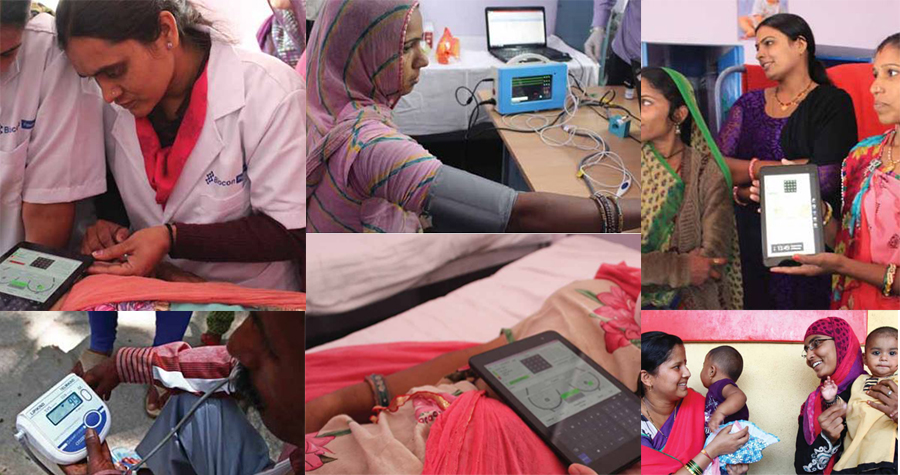
Biocon Foundation, the CSR arm of Biocon, has already leveraged the power of technology to take healthcare services to rural and remote areas. It has implemented the unique eLAJ project to deliver evidence-based healthcare for the benefit of communities with poor access to quality healthcare in Karnataka and Rajasthan. Patient-specific health data are captured on the eLAJ electronic medical record system and linked to an individual’s Aadhar. 

The Foundation has also implemented a mobile phone based health (mHealth) platform for early detection, prevention and treatment of oral cancer. This comprehensive, evidence based oral cancer screening program facilitates early detection at the doorstep. By empowering the frontline health worker to conduct cancer screening in a low resource setting, this program has ensured that healthcare reaches remote pockets in a cost-effective manner. By linking oral cancer specialists with the rural population through telemedicine, the mHealth platform has created an opportunity for diagnosis, follow-up and referral.

I truly believe that technology can solve many of the daunting healthcare challenges that we face as a country. 

Kiran Mazumdar-Shaw, CMD, Biocon


This article first appeared on Business Standard on Jan 2, 2017


Saturday, 30 July 2016

Biocon Advances In War Against Diabetes

Courtesy: Economic Times Blog 


There are nearly half a billion diabetes patients in the world. The alarming growth in the global diabetes population is leading to a huge demand for effective therapies from pre/early diabetes to late-stage disease. Of the 100 million people who need insulin globally, however, only ‘one in two’ can manage and afford costs associated with chronic insulin therapy.

As a leading insulins producer, Biocon is committed to provide affordable access to high quality insulins to patients worldwide through our differentiated portfolio, which includes rh-Insulin as well as basal and rapid-acting insulin analogs along with delivery devices. Our aim over the next 10 years to provide our insulin products to ‘one in five’ diabetes patients in need of insulin-based therapy anywhere in the world.

Already, our global scale capacities for manufacturing high quality, affordable insulins have positioned us as the largest Asian insulins player and the fourth largest producer of insulins in the world, enabling us to address the growing needs of diabetes patients across the globe. Globally, we are among the Top 3 biosimilars players in rh-insulin and Insulin Glargine in terms of market share.

Insulin Glargine Launch in Japan

In the beginning of FY17 we took a small but significant step in our journey to make a global impact in diabetes management through our affordable biosimilar insulins when our partner FUJIFILM Pharma launched our biosimilar Insulin Glargine in Japan. This is the first biosimilar from India and second biosimilar Glargine to be approved and launched in Japan. Importantly, this is also Biocon’s first biosimilar approval in a developed country.

Our product will provide a high quality, yet affordable, world-class long-acting biosimilar basal Insulin Glargine to the over 7 million people with diabetes in Japan.

As Japan has a reputation of very high expectations of product quality and manufacturing standards, the launch earns us huge credibility and validates our mission of delivering the highest quality at the lowest cost.

If fact, it is a testament to our commitment to quality and compliance that our manufacturing facilities were audited and approved by the Japanese regulatory agency, PMDA, on their very first inspection visit. It endorsed our strong R&D capabilities spanning process development, analytical characterization, and preclinical and clinical development, which were leveraged in submitting a comprehensive regulatory dossier to the Japanese health authorities.

The significance of the Japanese approval for Glargine goes beyond Japan as it will likely open some markets for us that rely on a developed country approval and provides confidence in terms of approvals in other developed markets.

Insulin Approvals in Malaysia

Our efforts to make our insulins more widely available also got a shot in the arm in the first quarter of FY17 with Biocon’s rh-Insulin becoming the first product manufactured at Malaysia to be approved for commercialization by the Ministry of Health (MoH), Malaysia. Biocon’s Insulin Glargine was also approved by the MoH, Malaysia. These approvals will open up commercialization opportunities for the company and will enable us to address the needs of nearly 3.3 million diabetes patients in Malaysia.

The commercialization of the Malaysian facility will augment our global scale in insulin production thus helping us achieve the ‘economies of scale’ needed to provide affordable insulin and insulin analogs to treat diabetes, which now affects nearly ‘one in 11’ adults globally. Regulatory filings for several other emerging markets are underway to enable commercial sales from the Malaysian facility.

Biocon is already recognized as Asia’s largest Insulin producer and our Malaysia facility will further strengthen our position as a global player.

The development of Insulin Glargine partnered with our partner Mylan is also tracking towards regulatory filings in the developed markets during this fiscal.

To address the diabetes burden in the US, we are collaborating with Lab PiSA to develop generic rh-Insulin. Biocon will be responsible for clinical development, regulatory approval and commercializing the product in the U.S. while PiSA would contract manufacture the drug product in their facilities in Mexico.


These significant developments at the beginning of FY17 have positioned us well to achieve our long cherished objective of providing affordable access to transformative, lifesaving biopharmaceuticals to patients across the globe.   


This piece was first published in the Plain Speak on Economic Times Blog on July 28, 2016

Thursday, 5 May 2016

A Collaborative Approach to Healthcare Delivery

Courtesy: TOI


The highest attainable standard of health is a fundamental right of every human being. In this context, universal access to healthcare assumes prime importance. However, healthcare delivery poses a significant challenge for policymakers in India.

A severe lack of resources means that there is only one doctor per 1,700 citizens in India, well below the minimum ratio of 1:1,000 stipulated by the WHO. There are also only 1.3 beds per 1,000 population, significantly lower than the other BRIC economies and the WHO guideline of 3.5 beds per 1,000 population. In rural areas and smaller towns of India, even basic health services remain inaccessible. Given the sorry state of affairs it is no surprise then that India continues to lag behind poorer neighbors like Bangladesh, Sri Lanka and Nepal in terms of child mortality. For every 1,000 children born in India between 2011 and 2015, 48 died on average every year before reaching the age of five, according to the World Bank. Equally alarming is the fact that a quarter of the world’s neonatal deaths and 15% of maternal deaths happen in India.

It is pertinent to note here that despite the fairly rapid pace of economic growth that India has experienced in the last 20 years, public health spending in the country is only about 1% of GDP. This compares to 3% in China, 4.1% in Brazil and 8.3% in the US.

Inadequate government spending on healthcare and lack of access to health insurance pushes almost 3% of India’s population into indebtedness and bankruptcy every year. To address this situation, the government needs to come forward and take proactive steps to implement a universal healthcare program that ensures basic healthcare services for everyone with minimum financial burden being passed on to the patient. 

India needs a universal healthcare program that hinges on affordability and access. This calls for existing public health infrastructure to be revitalized, new medical centres built and modern ICT-based telemedicine technology to be leveraged for addressing the demand-supply gaps in terms of doctors and health facilities. There is an urgent need therefore for public health spending in India to be raised to at least 2.5% of GDP as well as Public Private Partnership (PPP) models in healthcare to be promoted.   

PARTNERING TO MAKE HEALTHCARE ACCESSIBLE

The government alone cannot meet the healthcare infrastructure and capacity gaps in Tier II and Tier III cities as well as rural areas, and this makes private participation a must. While it’s true that some PPP projects attempted earlier have failed, clear policy guidelines can ensure the successful implementation and sustainability of healthcare PPP models in future.

The prerequisites should include agreed upon scope of work, legal and regulatory framework, resources pooling and management, transparency and accountability, suitable policies and a commitment to public good. It is necessary that PPPs ensure that government services are delivered in an economical, effective and efficient manner. The role of the government should be proactive and it should identify areas in National Health Programs, diagnostic and curative services where partnerships are possible. The government should also develop working guidelines based on successful experiences of different states besides framing quality guidelines with professional help from organizations that already have experience in preparing quality assurance tools. Lastly, smart business models need to be put in place without which it will be difficult for private players to achieve reasonable returns on investment.

It is encouraging to see that the NDA government is looking seriously at PPP models for improving healthcare access to the country’s 1.2 billion people and lessen the healthcare burden on the common man. At a time when the federal government is examining ways to implement healthcare initiatives under the PPP model in a time bound manner, states like Rajasthan have already set the ball rolling.

THE RAJASTHAN EXPERIENCE

The Vasundhara Raje government in Rajasthan has partnered with the private sector for running Primary Health Centres (PHCs) and sub-centres across the state. Rajasthan, which is geographically the largest state in India, has over 500 Community Health Centres, over 2,000 PHCs and over 13,000 sub-centres. Several PHCs, which are located in remote areas, are now being run on a PPP model. The terms of the PPP engagement are simple. While the state government will provide the necessary infrastructure, medicines, equipment and operational costs, the private operator would provide doctors, paramedics and other staff, free outpatient services and 24-hour emergency services. These PHCs are already reporting encouraging results as the improvement in cleanliness and availability of staff and medicines  have led to a jump in the number of patients being treated.

The Rajasthan government has also launched a health insurance scheme to provide medical coverage of up to Rs 3 lakhs to each citizen and is expected to cover nearly 70% of the state’s population.

Health insurance is an area where PPP arrangements have been successful. The Yeshasvini Co-operative Farmer’s Healthcare Scheme, a PPP scheme involving Narayana Health and the Karnataka government, offers coverage of over 800 surgical procedures to farmers and their family members. Yeshasvini is one of the largest self-funded healthcare insurance schemes in the country. Neighboring Andhra Pradesh runs the Arogya Raksha Scheme in collaboration with the New India Assurance Company and with private clinics. The scheme, which is fully funded by the government, provides hospitalization benefits and personal accident benefits to citizens below the poverty line.

TOWARDS A HEALTHIER FUTURE

The new Companies Act of 2013 mandates corporates to spend 2% of their profits on CSR activities. The government can take this opportunity to partner with the private sector for taking healthcare delivery to the next level. It will lead to a huge improvement in healthcare delivery in India through a combination of good infrastructure, latest technology and the best available medical expertise. If PPPs are need based and customized to local circumstances, they clearly have the potential to drastically change the healthcare landscape in India.


PPPs can thus be a 'win-win' arrangement in which diverse actors with varied motivations and philosophies work together to contribute to the health of the people and the development of the country.

This piece was first published in the print version of TImes of India on May 5th, 2016

Friday, 13 February 2015

Ensuring World Class Affordable Cancer Care


This video captures the highlights of the daylong NDTV Fortis CANCERTHON campaign telecasted on Sunday, Feb 8th, 2015. The initiative, focused on creating awareness on Cancer and raising funds to support treatment of children suffering with Cancer. This video talks about the affordable Cancer Care model at the Mazumdar Shaw Cancer Centre.

Saturday, 26 April 2014

Why FY14 was a Remarkable Year for Biocon


The fiscal year gone by has been one of the most exciting ones for Biocon. We delivered on our promise of affordable innovation, recorded robust top line and bottom line growth, augmented our capacities, optimized our product portfolio and introduced initiatives to achieve operational efficiencies.
  
We successfully commercialized two world-class, low-cost monoclonal antibodies, an outcome of our innovation model– ALZUMAb™ and CANMAB™ , in India in FY14.

Our novel, ‘first-in-class’ biologic drug for chronic plaque psoriasis, ALZUMAb™, was made available to patients in August 2013. It is the first biological drug for psoriasis to be researched, developed and manufactured in India. ALZUMAb™ has received an enthusiastic response from both physicians and patients as it is an affordable treatment option that promises patients a better quality of life. This unique product offers an effective biologic treatment solution to 1-2% of the Indian population who suffer from psoriasis.

Biocon followed this up with CANMAb™, the world’s lowest priced trastuzumab. The launch of CANMAb™ in India represents an important milestone. It demonstrates that Biocon’s decade-long experience and expertise in developing biologics has equipped the company with the necessary clinical development and manufacturing skills to deliver high quality, world-class products.   

Creating IP, Adding Value

With these two launches, Biocon has again proved to the world that as far as scientific talent is concerned Indians are second to none.

Moreover, these two launches have lent credibility to our strategy of building a rich pipeline of innovative programs that has today made Biocon one of the highest R&D spenders in this country.

I believe that the only way we can create exponential and enduring value for Biocon’s stakeholders is through innovation and intellectual wealth and I am happy to say we are doing just that.

Here, I would like to draw attention to the fact that Biocon has been able to deliver on its promise of affordable innovation despite the current hostile environment towards pharma innovation in India.

Surmounting Challenges

Uncertainty over clinical trials is just one of the several challenges that Biocon faced in FY14. But in keeping with the company’s ethos, we addressed them with a sense of dedication and determination.

The clinical trials environment in India has become extremely challenging because of the irrational stand taken by courts on the issue and the government’s knee-jerk policy-making to mollify the judiciary.

If the situation is not rectified, it can have an irretrievable impact on India's ability to partake in new drug development and end up denying patients here the benefits from the latest advances in medical science.

To address the increasing product commoditization in the small molecules business and improve profitability, Biocon had embarked on its strategy of moving up the value chain to forward integrate into building a robust pipeline of generic formulations, including ANDAs for the US market. This pipeline of difficult-to-make, technology-intensive molecules will be the growth driver for the small molecules business in the next few years. It will also make Biocon among the few companies in the world with a strong portfolio of small molecule generics as well as generic biologics.

In FY14, the domestic pharma industry saw growth slow down to 6% due to the combined impact of economic slowdown, intense competition, and issues related to drug price controls. However, leveraging the strengths of its business model with a focus on specialty pharma, Biocon was able to outpace the industry, growing its India business revenue at 13%, over double the pace of the industry growth.

Financial Highlights

Besides, the India branded formulations business, other principal revenue drivers like insulin exports and research services also helped Biocon’s revenue jump 16% in FY14. Our profit for the previous year was boosted by an exceptional income related to the dissolution of our global partnership with Pfizer. Excluding the exceptional income recognized last year, profit for FY14 grew 28%.

Good demand from emerging markets for our insulin exports led to a 15% growth in Biopharma sales for the year. To meet increasing demand, Biocon had enhanced its insulin manufacturing capacity in Bangalore in FY14.

Given Syngene’s growing stature as a pharma outsourcing partner of global repute, it was no surprise then that our research services business reported stellar growth of 28% in FY14.

Syngene, which has marquee clients like BMS and Abbott, got a strong endorsement of its capabilities this year after Baxter established its Global Research Center at Syngene in Bangalore.

Other Highlights

In FY14, Biocon strengthened its focus on research partnerships with two important collaborations.

Biocon entered into a pact with Quark Pharmaceuticals to develop novel therapeutics for treating serious ophthalmic conditions like glaucoma.

It also tied up with Advaxis for developing a novel cancer immunotherapy to treat HPV-associated cervical cancer in women.

As a leading bio-pharma enterprise Biocon embarked on establishing Biocon Academy, a Centre of Excellence for Advanced learning in Biosciences. The Academy will train engineering and biotech graduates to enhance their employability and strengthen the talent pipeline for the benefit of the country’s bio-pharma sector. The first batch of 30 students who underwent 16 weeks of rigorous learning and skill development will be ready for placements in May. As an extension of its Corporate Social responsibility Biocon is offering 75% of the course fee as scholarship to all the students.

For its flagship program, the Academy has collaborated with Keck Graduate Institute, California.

Biocon was ranked No 6 amongst the Top Ten Global Best Employers as a mark of recognition for its Clarity of vision, CSR initiatives and Quality of research, by the 'Science' Magazine in 2013. It had debuted on the list in 2012 at No. 19.

We stay committed to pursue our innovation led business strategy and build superior value for Biocon and its stakeholders.